The resourceful farmers’ knowledge of the earth is harmonious with the responsibility to be good stewards of this wonderful gift from God: our planet. As a Native American proverb states: “We do not inherit the earth from our ancestors, we borrow it from our children.”
In 2018, Agros intiated a procees for appliying Climate Smart Agriculture principles as a cross-cutting methodology across all its programs in Central America, in line with its committement to creating sustainable and resilient agricultural communities and its mission to transform the livelihoods of farming families and build for them a brighter future.
Ensuring farmer’s livelihood are not threatened by mitigation and adaptation efforts: practices must benefit farming families
Increasing farmer’s resilience and adaptive capacity
Reducing agriculture’s carbon footprint and making agriculture part of the solution
Agros is dedicated to reducing the environmental impact of agricultural activities. Its initiatives include the creation of terraces and planting of forests that help negate soil erosion, protect vital water sources, and the installation and implementation of biofactories for producing agroecological bio-inputs in regular manner, therefor minimizing the use of fossil fertilizers.
These actions help offset carbon emissions and contribute to a healthier planet, while also enhancing the sustainability of farming practices.
To integrate these three climate-smart principles, Agros embarked on a comprehensive learning journey. Initially, to trained the staff in Best Agricultural Practices (BAP), enabling them to develop a robust training curriculum for beneficiary producers and their families. This ongoing process evolves continuously within each area of impact of Agros programs in Central America.
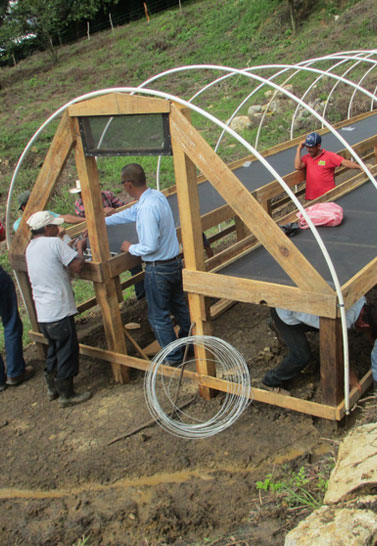
In conjunction with the continuous training in BAP, the organization made strategic investments to sustainably adapt the production system from social, economic, and environmental perspectives. This effort led to the development of Climate Smart Agribusiness Modules, encompassing:
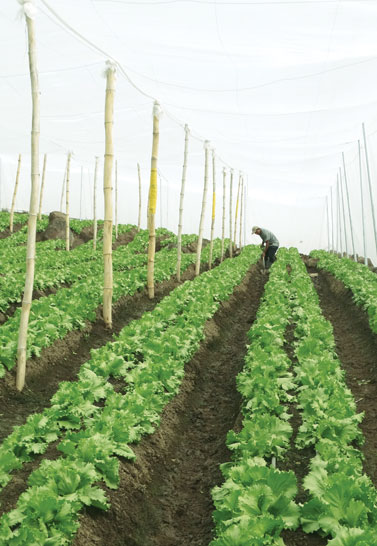
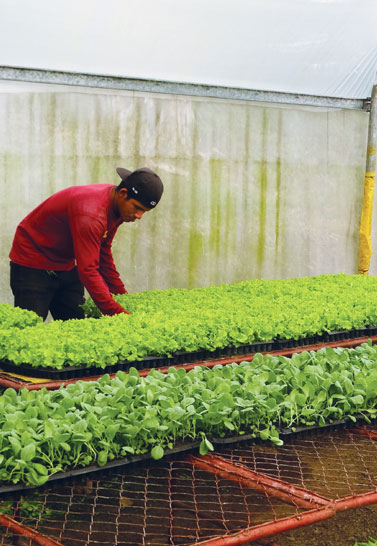
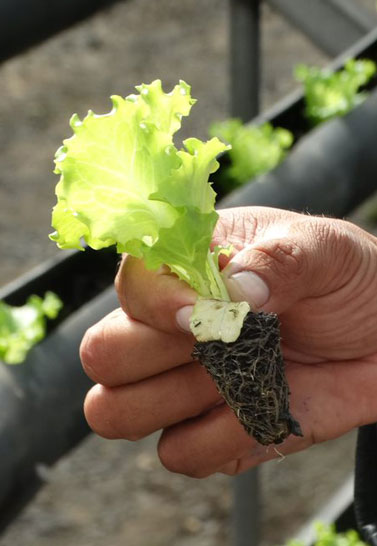
These areas enable year-round crop production, beyond seasonal limitations. They provide better pest and disease control and facilitate the responsible use of water resources. Currently, Agros count with have:
Agros mission is to transform lives through the development of prosperous agro-villages.
Therefore, investment in training modules, Agroshouses, and biofactories transcends the concept of climate-smart agriculture, into building climate-smart villages where residents adopt the following processes:
Use of Eco-Stoves in 100% of households in the villages, supported by energy banks from the planting of high-growth forest species Acacia Magium, providing the raw material for controlled food cooking.
Before: require large amounts of firewood, poor ventilation exposing households to highly toxic, dense smoke.
After: The fire’s isolation n combination with better air flow, makes the stove more efficient, requiring a smaller fire and less wood to thoroughly cook food.
Recycling and solid waste management: Through the installation of Eco-Sanitation Latrines in all communities, an environment friendly sustainable sanitation system which regards human waste as resource for agricultural purposes and food security, villagers reduce their health risks related to contaminated water and waste. The systema prevent groundwater pollution and surface water pollution; and allows the reuse of nutrients or energy contained within wastes.
Before: during the rainy season, common pits would turned into flood flows that contaminated the community and increased the risk of unsanitary conditions.
After: By promoting hygienic practices, diseases are avoided. This effort is accompanied by awareness-raising efforts to ensure rational water use by resident families.
Fully organic production is not viable for achieving productivity alongside climate management principles. Aware of this, a recycling process was installed, consisting of storing and collecting chemical residues for disposal treatment to ensure that these inputs do not reach rivers and other water sources to prevent them from becoming pollutants.
Before: Community members used containers contaminated with chemical residues as household utensils or for agricultural production.
After: In every alley and street of the Agros Aldeas, a disposal bin has been established for proper chemical waste disposal.
The Agros Aldeas counts with garbage bins in common areas to provide the community with a waste disposal system. This effort is accompanied by a continuous awareness process for proper household waste management.
Before: Villagers would burn the garbage in open fields, exposing people to pollutant particles that endanger their health and affect the environment of the community.
Now: Families properly dispose of their waste in bins, which the municipal cleaning system transports to landfill areas.
Management of drinking water through community-based organizations to ensure potable water provision to all communities.
Before: water wastage with adverse effects on child malnutrition and food security
After: communities with access to water and sanitation trainedand organized to use it rationally.
By using Cool Farm Tool (CFT), the most recognized methodology for measuring emissions and carbon capture, Agros is evaluating its production systems to determine their capacity as a carbon emitter or net captor on regular basis.
Preliminary results precisely define the carbon emission of each village and how their crops contribute to capturing emissions, identifying and replicating climate-smart productive systems.
Increase in crop yields:
18-32%
(depending on the crop)
The application of the 3 CLIMATE SMART PRINCIPLES is not carried out in a controlled lab plot or pilot project but is implemented in a scalable model with all program producers.
Technology, productivity, and proper water resource management.
Cost reduction, self-sufficiency, and regeneration of natural resources in productive inputs.